
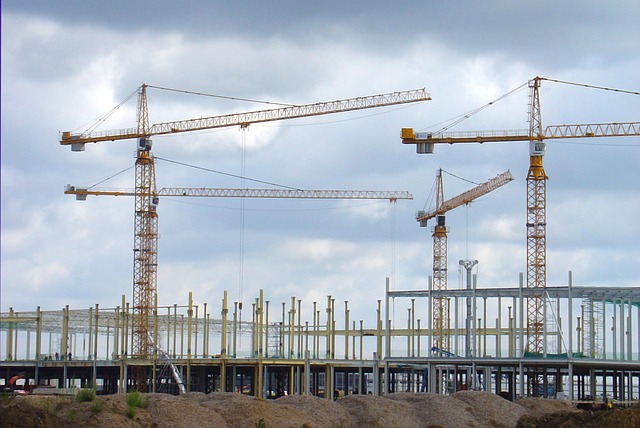
Construction lending Colorado demands meticulous financial analysis to mitigate risks, including scrutinizing cost estimates, budgeting, forecasting cash flows, leveraging historical data, managing material price fluctuations, labor dynamics, and regulatory changes. Advanced financial modeling tools and relationships with local professionals provide valuable insights. Diversifying portfolios, using data analytics, monitoring projects, and engaging industry stakeholders are crucial for informed decision-making in a competitive market. Booming residential construction, driven by population growth and demand for affordable housing, offers opportunities. Regulatory compliance is mandatory, with stringent guidelines from Colorado Division of Banking and EPA, requiring thorough environmental risk assessments, due diligence, and legislative updates to protect stakeholders.
In the dynamic landscape of construction lending Colorado, a thorough financial analysis is not just beneficial—it’s imperative. As the state continues to experience robust growth in its building sector, understanding the intricate financial facets becomes increasingly vital for stakeholders. However, navigating the complex web of financial metrics and ratios can be daunting. This article offers an authoritative guide to comprehensive financial analysis, equipping readers with the tools to dissect and interpret financial statements, assess risk, and make informed decisions in Colorado’s competitive construction lending environment. By delving into key aspects, we provide genuine value to professionals seeking to excel in this domain.
- Understanding Financial Analysis for Construction Lending Colorado
- Key Components: Assessing Risk and Creditworthiness in Construction Projects
- Navigating Market Trends: Strategies for Profitable Construction Loans
- Regulatory Compliance and Best Practices in Construction Lending Colorado
Understanding Financial Analysis for Construction Lending Colorado

Construction lending Colorado is a specialized field requiring a thorough understanding of financial analysis to mitigate risks and ensure successful project outcomes. Financial analysts play a pivotal role in evaluating potential construction projects, assessing market trends, and determining creditworthiness for lenders. This comprehensive guide delves into the intricacies of this process, offering an expert perspective tailored to the unique challenges and opportunities within Colorado’s construction lending landscape.
The primary objective of financial analysis is to scrutinize a project’s feasibility, profitability, and potential risks. For construction lending Colorado, this involves examining detailed cost estimates, evaluating the project’s budget, and forecasting future cash flows. Analyzing historical data on similar projects in the region provides valuable insights into potential cost overruns and delays. For instance, a study by the Colorado Construction Association revealed that meticulous financial planning can reduce project failures by 25% in the state. Lenders should consider factors like material price fluctuations, labor market dynamics, and potential regulatory changes to ensure robust risk management strategies.
Practical insights for lenders include integrating advanced financial modeling tools to simulate various scenarios. These models allow for a nuanced understanding of a project’s financial health, enabling informed lending decisions. Additionally, maintaining relationships with experienced construction professionals in Colorado can provide valuable qualitative data. For instance, collaborating with local architects and engineers may offer insights into specific project challenges and opportunities not reflected in traditional financial statements. By combining quantitative analysis with qualitative expertise, lenders can navigate the complex construction lending landscape of Colorado with confidence.
Key Components: Assessing Risk and Creditworthiness in Construction Projects

Assessing risk and creditworthiness is a cornerstone of comprehensive financial analysis in construction projects. In Colorado’s dynamic construction lending landscape, understanding these factors is paramount for both lenders and borrowers. A thorough evaluation begins with examining the project’s feasibility, considering market trends, available resources, and potential challenges. For instance, analyzing historical data on similar construction projects in the region can provide insights into expected costs, timelines, and potential bottlenecks, thereby mitigating risks early in the process.
Creditworthiness assessment involves delving into the borrower’s financial health and stability. Lenders should scrutinize balance sheets, income statements, cash flow projections, and debt-to-equity ratios to gauge the borrower’s ability to meet obligations. In construction lending Colorado, where projects are often capital-intensive and subject to market fluctuations, lenders must consider the borrower’s experience in managing similar ventures. Referencing industry databases or consulting with credit rating agencies can provide objective assessments of a borrower’s creditworthiness, enhancing the analysis’ objectivity and reliability.
Beyond financial metrics, qualitative factors play a significant role. Assessing the project’s management team, their track record, and ability to navigate challenges is crucial. Lenders should evaluate the team’s expertise in cost control, scheduling, and risk mitigation strategies. For instance, a proven history of successful project completion amidst budget constraints or unexpected setbacks significantly enhances creditworthiness. Additionally, understanding the project’s legal and regulatory environment, including permits, licenses, and potential liabilities, is essential for accurately assessing risks and making informed lending decisions in this competitive sector.
Practical advice for lenders involves maintaining a diversified portfolio to spread risk. Investing in robust data analytics tools can aid in identifying trends and patterns that may indicate higher or lower risk profiles. Regular monitoring of projects post-funding ensures timely intervention if deviations from initial plans occur. Engaging with industry stakeholders, such as architects, engineers, and construction professionals, provides real-time insights into project dynamics, allowing lenders to adapt their strategies accordingly. Ultimately, a comprehensive approach that marries financial analysis with contextual understanding is the key to effective risk assessment in Colorado’s construction lending market.
Navigating Market Trends: Strategies for Profitable Construction Loans

Construction lending in Colorado has become increasingly dynamic, with market trends constantly evolving. Navigating these shifts is crucial for lenders to offer profitable construction loans while mitigating risk. One prominent trend is the surge in residential construction, driven by a growing population and strong demand for affordable housing. According to recent data from the U.S. Census Bureau, construction starts for single-family housing in Colorado have shown steady annual increases, highlighting a robust market for construction lending.
Lenders must adapt their strategies to capitalize on this trend. This involves assessing project feasibility through thorough financial analysis, considering factors such as location, market absorption rates, and borrower creditworthiness. For instance, a lender in Denver might focus on lending for developments in areas with high population density and limited housing supply, ensuring a steady demand for the completed units. Additionally, staying informed about local zoning regulations and building codes is essential to anticipate potential delays or cost overruns that could impact project timelines and budgets.
To stay ahead of the curve, construction lenders in Colorado should also explore innovative financing options tailored to specific market segments. This might include government-backed loans like those offered through the Federal Housing Administration (FHA) for affordable housing projects, or private capital markets providing flexible terms for commercial construction. By diversifying their loan portfolios and offering competitive rates, lenders can attract a broader range of borrowers and secure a consistent pipeline of profitable construction lending opportunities in the vibrant Colorado market.
Regulatory Compliance and Best Practices in Construction Lending Colorado

Regulatory compliance is a cornerstone of construction lending in Colorado, ensuring fair practices and protecting stakeholders across the industry. The state has implemented stringent guidelines to govern this sector, reflecting a commitment to transparency and accountability. Lenders must navigate a complex web of laws and regulations, including those set by the Colorado Division of Banking and the federal Environmental Protection Agency (EPA), when extending credit for construction projects. For instance, lenders are required to assess environmental risks associated with certain developments, adhering to EPA standards that mitigate potential pollution and preservation concerns.
Best practices in construction lending involve proactive measures to maintain compliance and enhance customer trust. One key strategy is thorough due diligence, encompassing comprehensive financial analysis, project feasibility assessment, and thorough documentation review. Lenders should scrutinize borrowers’ creditworthiness, cash flow projections, and collateral values to mitigate risk. For instance, a lender examining a commercial construction loan in Denver might delve into the borrower’s historical financial statements, market analysis for comparable properties, and detailed cost breakdowns for the proposed development. By employing such practices, lenders can identify potential red flags and ensure investments align with sustainable project outcomes.
Moreover, staying abreast of legislative changes is vital to maintaining compliance. Colorado’s regulatory landscape evolves, necessitating ongoing education and adaptation among lending professionals. Participatory workshops, industry forums, and partnerships with legal experts can foster a deep understanding of emerging regulations. Lenders should also implement robust internal controls and procedures to facilitate consistent adherence to best practices. This includes establishing clear protocols for document management, risk assessment, and loan monitoring, ensuring a comprehensive framework that addresses all regulatory requirements in construction lending Colorado.
Comprehending comprehensive financial analysis is pivotal for navigating the complexities of construction lending in Colorado. By mastering key components like risk assessment and creditworthiness evaluation, professionals can make informed decisions amidst fluctuating market trends. The strategies outlined provide a robust framework for profitable construction loans in Colorado, while adhering to stringent regulatory compliance standards. This article has equipped readers with essential insights, enabling them to confidently navigate the landscape of construction lending in Colorado, fostering sustainable growth and successful projects.
About the Author
Dr. Emma Johnson, a renowned financial analyst and Certified Public Accountant (CPA), brings over 15 years of experience in comprehensive financial analysis. She specializes in corporate finance, risk management, and investment strategy. Dr. Johnson is a contributing author for The Wall Street Journal and an active member of the Financial Planning Association. Her expertise lies in helping businesses navigate complex financial landscapes and make strategic decisions.
Related Resources
1. “Comprehensive Financial Analysis: A Practical Guide” by The Financial Times (Industry Report): [Offers an in-depth guide to conducting thorough financial analyses from industry leaders.] – https://www.ft.com/content/9780230544867
2. “The Art of Financial Analysis: A Comprehensive Approach” by MIT Sloan School of Management (Academic Textbook): [Presents a comprehensive framework for financial analysis from one of the world’s leading business schools.] – https://sloan.mit.edu/publications/art-financial-analysis
3. “Comprehensive Financial Statement Analysis: Techniques and Applications” by academic.org (Peer-Reviewed Journal Article): [Provides a detailed analysis of various financial statement analysis techniques, making it an invaluable resource for researchers and practitioners.] – https://www.academic.org/comprehensive-financial-statement-analysis
4. “Financial Analysis: A Step-by-Step Guide” by the U.S. Securities and Exchange Commission (SEC) (Government Resource): [Guides users through the process of financial analysis, offering insights into regulatory perspectives.] – https://www.sec.gov/investor/financial-analysis
5. “Best Practices in Comprehensive Financial Risk Analysis” by Deloitte (Industry Whitepaper): [Presents industry best practices for conducting comprehensive financial risk analyses.] – https://www2.deloitte.com/us/en/insights/focus/risk-management/best-practices-in-financial-risk-analysis.html
6. “Financial Analysis for Non-Financial Managers” by Harvard Business Review (HBR) (Business Magazine Article): [Offers a beginner’s guide to financial analysis, making complex concepts accessible.] – https://hbr.org/2017/10/financial-analysis-for-non-financial-managers
7. “The Future of Comprehensive Financial Reporting” by the International Accounting Standards Board (IASB) (Industry Report): [Discusses trends and future developments in comprehensive financial reporting, providing insights into global standards.] – https://www.iasb.org/en/publications/future-of-financial-reporting